Why Do French People Reply in English When You Speak French?
I lived in Le Havre for several years and, in all that time, people rarely replied to me in English, even when my French was terrible and I was desperate for someone to speak English to me!
I'd often get a blank, confused look, or even a panicked "I don't speak English!" when I was actually speaking French! Even when my French was pretty decent!
Now I live near Paris, I have the opposite problem. Whenever I'm out and about in Paris, people reply to me in English all the time. I say one syllable and they know straight away that I'm not French.
It's quite ironic really. When I desperately wanted people to speak English to me, nobody did. Now that I can speak French and actually want to, they reply in English!
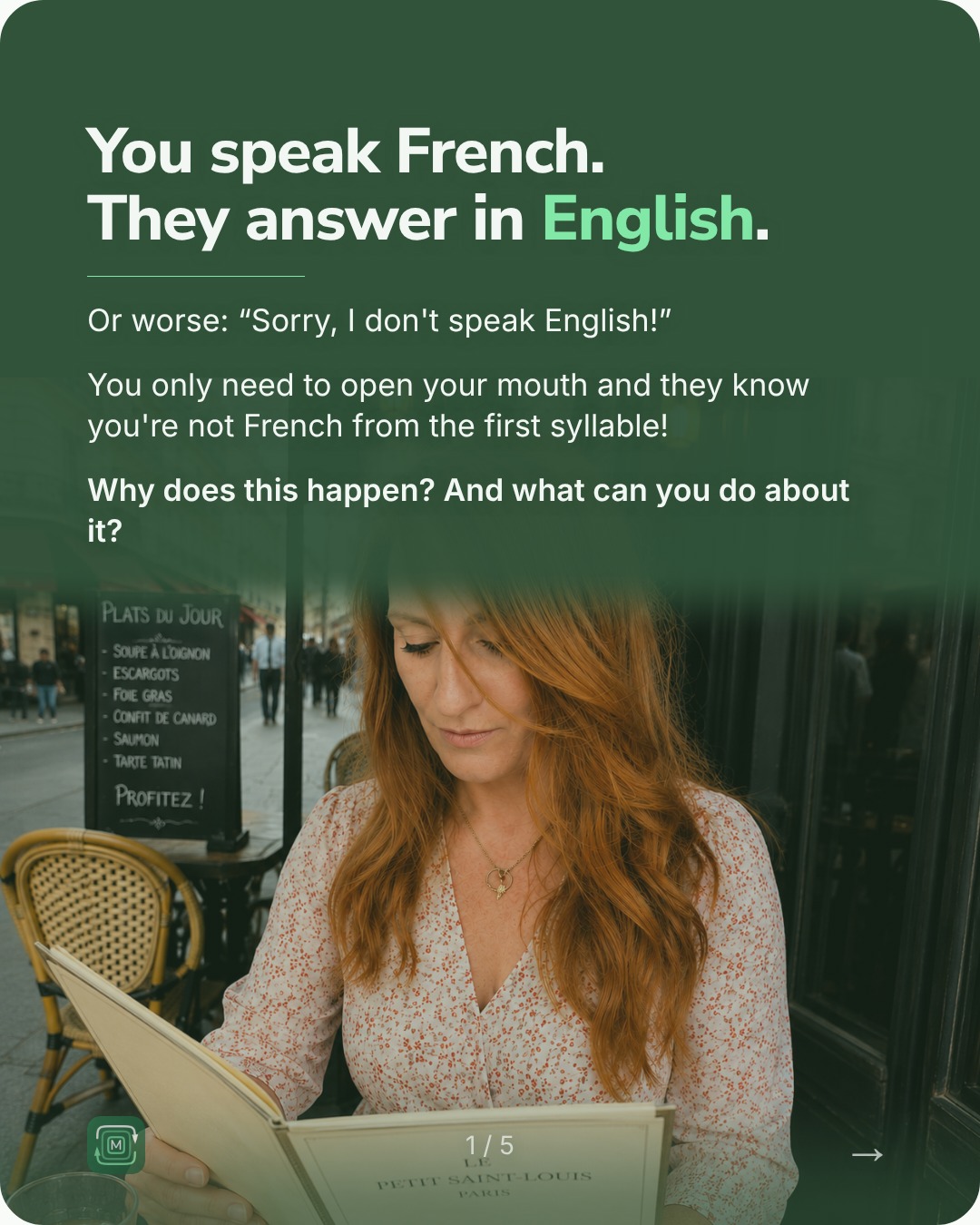
So why do French people reply in English, or struggle to understand what you're saying, even when you're speaking French to them?
Why do French people respond in English?
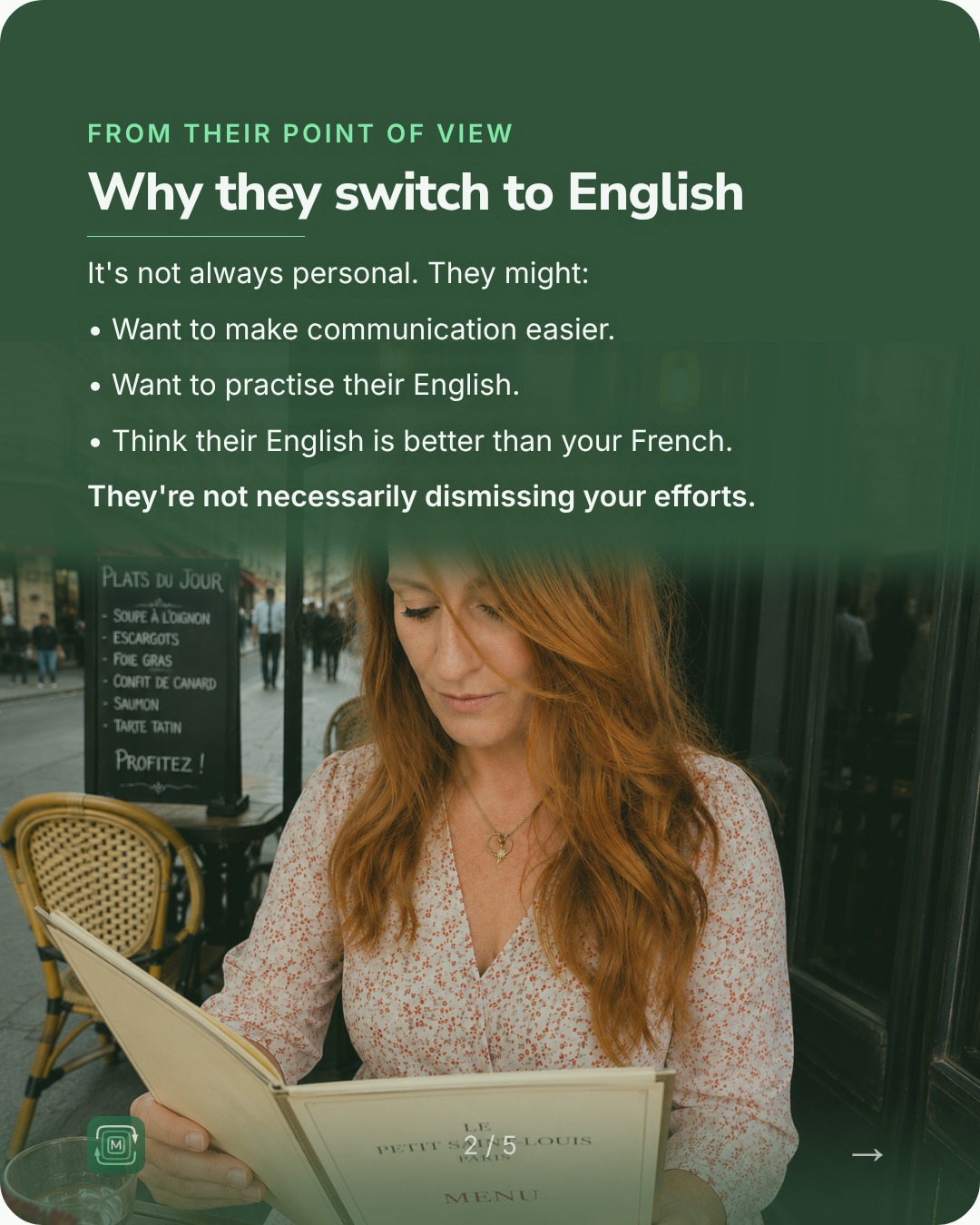
Most people are simply trying to help. In a busy café or shop, switching to English can feel like the quickest and easiest way to communicate. Some want to practise their English, and others just assume their English is better than your French.
I find that last one particularly frustrating these days, especially when someone insists on continuing a conversation in very basic English when I know we could communicate much more easily in French!
Where you are in France also makes a big difference. You're much more likely to encounter English speakers in Paris and other popular tourist destinations than in places like Le Havre, where I rarely had the option of switching to English.
The real reason: what my English accent was telling people
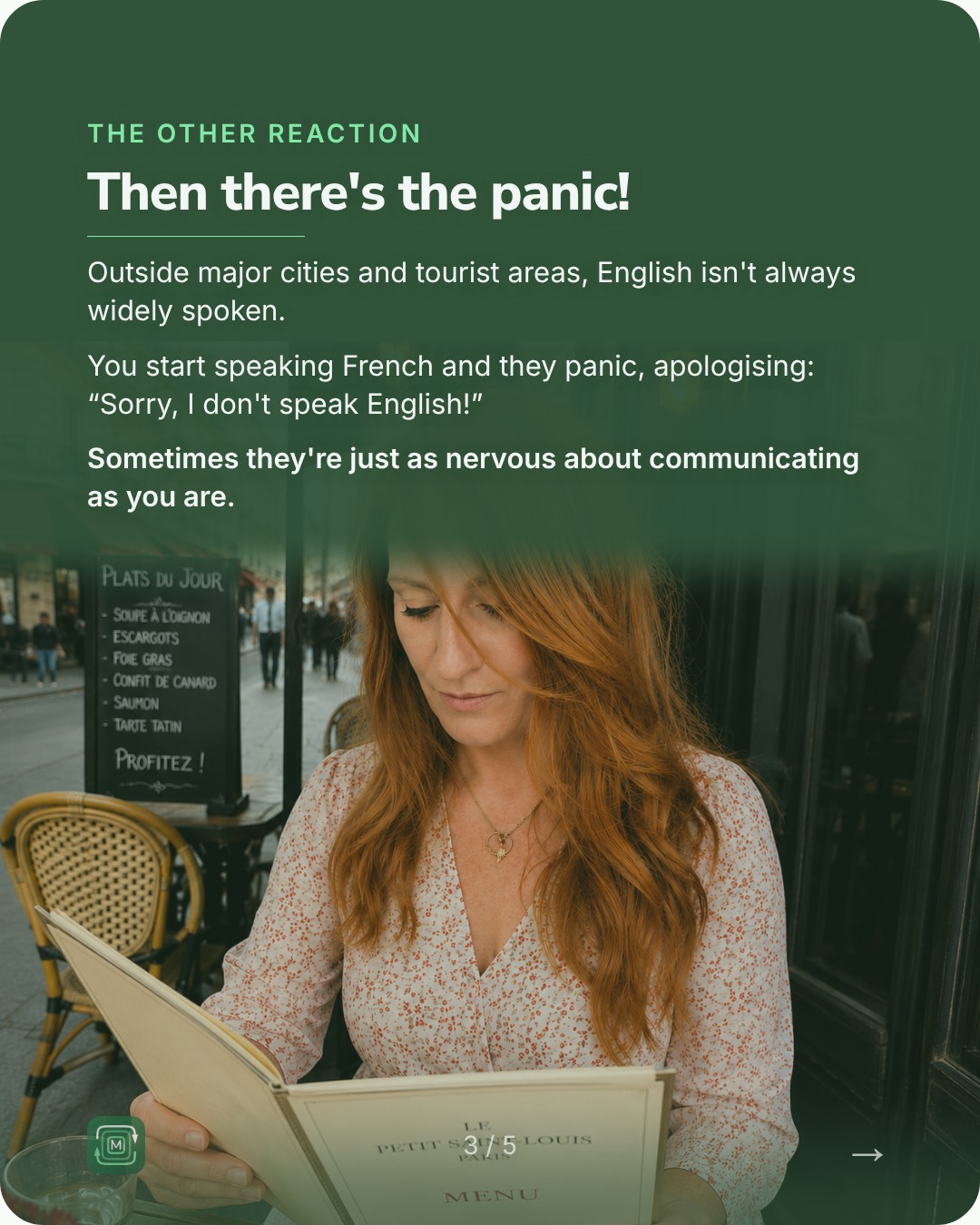
Here's the part that's harder to admit. More than once, I've been speaking French to someone who didn't speak English, and they've panicked and said, "I don't speak English!"
I was speaking French!
It's frustrating enough when someone replies to you in English, but when they don't even recognise that you're speaking French, it's a whole other level of frustration.
That really hit me because I'd put so much time in. Years of lessons, exams and living here. I knew the words and the grammar, but none of that matters if people can't understand what you're saying.
That's when I realised it wasn't necessarily my knowledge of French that was the problem. It was my pronunciation. I'd never spent any real time working on the sounds themselves.
I think the same thing often happens in Paris. Someone hears my English accent and immediately assumes that communicating in English will be easier. Someone who doesn't speak English might hear those same unfamiliar sounds and panic.
Two very different reactions, potentially triggered by the same thing.
Why French people can struggle to understand an English accent
In the UK, we're used to hearing English spoken with all kinds of accents, so we're generally quite accustomed to understanding people who pronounce words differently.
For some French people, particularly those who live outside tourist areas or international cities, it's a different experience. They may have had far less exposure to French spoken with foreign accents.
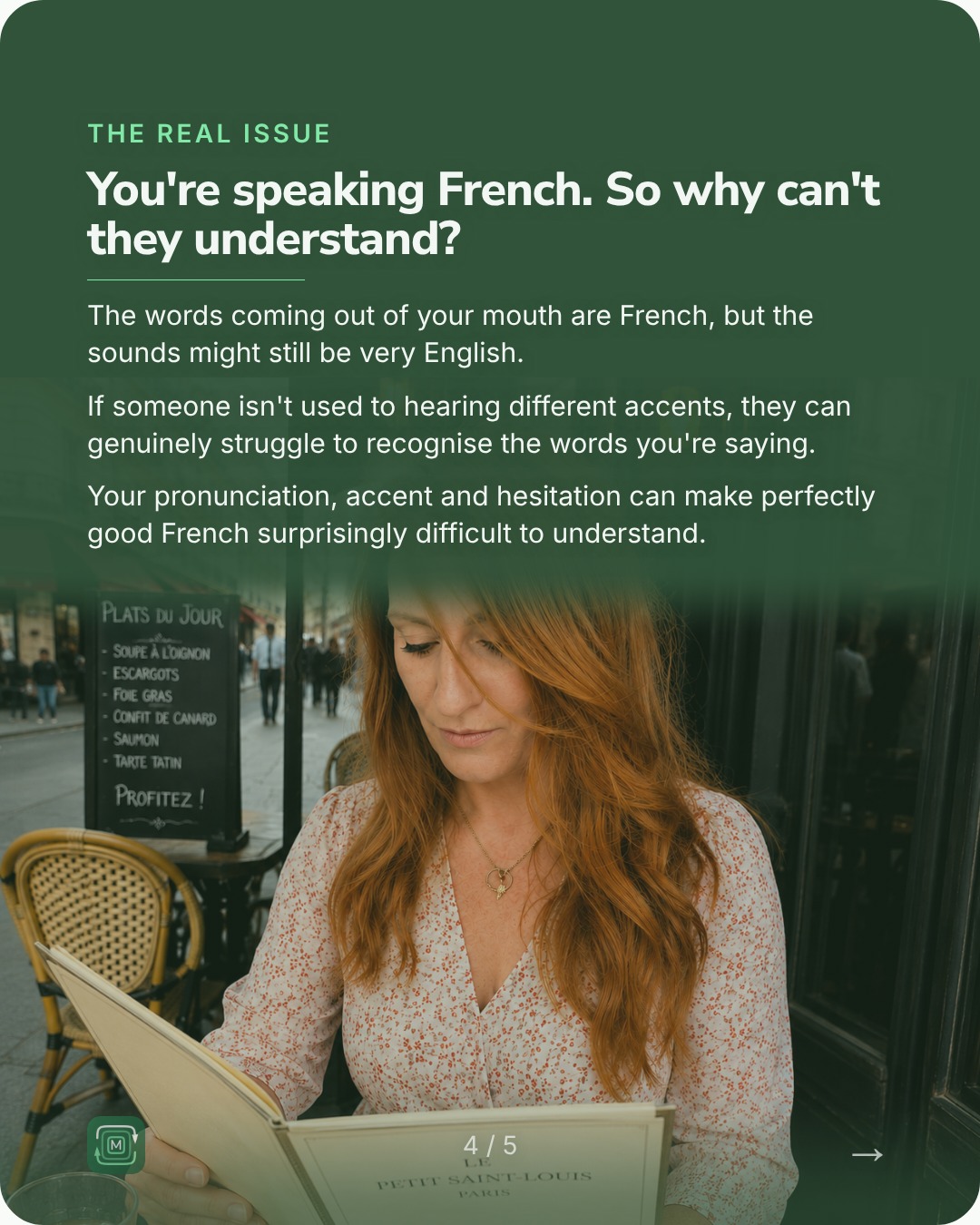
Whether you're English, Irish, Scottish, American or Australian, the sounds and rhythm of your native language can carry over into your French. This can make it surprisingly difficult for someone who isn't familiar with your accent to recognise the words you're saying.
The words coming out of your mouth are French, but the sounds might still be very foriegn.
You might not think the sounds you're making are that different from the French ones, but to a native French speaker, they can be!
I'm not suggesting you need to lose your accent. I'm certainly not planning on losing my northern English one! There's a difference between having an accent and mispronouncing sounds that affect how well you're understood.
The French sounds that give English speakers away
These are some of the sounds and pronunciation patterns that French people can pick up on straight away:
- - The French R.
- - Nasal vowels.
- - U and OU.
- - Rhythm
There are some French sounds that simply don't exist in English. and I've written more about this in Why Is French So Hard to Pronounce For English Speakers?
Is it common for French people to speak English?
Not as common as a lot of people think. In EF's 2025 English Proficiency Index, France was among the lowest-ranked countries in the EU for English proficiency. So please don't come here expecting everyone to speak English. You shouldn't assume that about any country, but especially not France.
Looking back, I'm thankful I lived in Le Havre first. If I'd lived in Paris from the beginning, I don't think I'd have felt the same pressure to learn as much French as I did.
In my experience, French people are quite aware of their reputation for not speaking English, and some are embarrassed about their level. Even if someone can speak a little English, they may lack the confidence to use it. It's worth remembering that the person you're speaking to might be experiencing exactly the same language anxiety as you, just in reverse!
How to stop French people replying in English (or giving you that blank look!)
If someone switches to English and you'd like to carry on in French, you can simply ask:
Je peux continuer en français ? J'essaie de pratiquer.
(Can I carry on in French? I'm trying to practise.)
Most people are happy to. If they're busy or there's a queue, let it go and pick a better moment.
If someone panics and says they don't speak English, tell them Je parle français! with a smile. Then slow down, speak clearly and keep it short. A few clear words are much easier to understand than a long, rushed sentence.
I'm particularly guilty of this. When I'm feeling confident, I have a tendency to speak French really quickly, only to be met with a completely bewildered look. Speaking faster doesn't necessarily mean you're speaking better!
1. Prioritise your French pronunciation
What can really make a difference is working on your pronunciation, so people recognise the French sounds from the very first syllable.
Honestly, I'm annoyed with myself that I didn't do this sooner. I spent years on grammar and exams, and hardly any time on how French actually sounds. If I'd focused on pronunciation and phonetics from the start, I think a lot of those awkward encounters and "I don't speak English!" moments might never have happened. I've shared more of what's worked for me in How to Improve Your French Pronunciation.
2. Listen and repeat phrases you use the most often
Pick the phrases you use most, add them to Mimique, listen to them in a natural French voice and say them out loud. Mimique records you and gives you pronunciation feedback on each word, so you can identify which sounds you need to work on.
Just five minutes a day of listening and repeating really does add up and improve your spoken French. I've written more about this in Shadowing Technique for French: Learn by Listening and Repeating
The goal isn't to sound French. It's to be understood when you speak French.
If French people keep replying to you in English, it doesn't necessarily mean your French isn't good enough. It might just mean it's time to work on how it sounds.
Practise the phrases you use every day, out loud and with pronunciation feedback. Start for free at mimique.app.
Questions people ask
Why do French people switch to English?
Usually to help, to save time, or to practise their English. A strong English accent is often what sets it off: they hear one syllable and switch. Practising the sounds that give your accent away, for example in Mimique, means fewer people switch.
Is it common for French people to speak English?
Less common than many people expect. In EF's 2025 English Proficiency Index, France was among the lowest-ranked EU countries for English. In Paris I hear English all the time, but in my years in Le Havre hardly anyone spoke it to me.
Do most people in Paris speak English?
Many do, especially in shops, cafés and anywhere with tourists, and the Paris region has the highest English score in France. That's why replying in English happens so much more there than in other parts of France.
Why can't people understand my accent in French?
Often it's the sounds, not your vocabulary or grammar. French has sounds that don't exist in English, like the R, the nasal vowels and the u. If you've never practised them, people may not even realise you're speaking French. Mimique gives you pronunciation feedback on each word so you can hear which sounds need work.
What is the best app to practise speaking French?
It depends on what you need. Apps like Duolingo are good for vocabulary and habit, but they don't focus much on speaking. If you want to practise saying real phrases out loud and get pronunciation feedback, Mimique lets you add your own phrases and practise them until you're understood.
Written by Leanne O'Leary, an English web developer who's lived in France for several years and built Mimique to help English speakers practise French out loud so French people no longer reply in English.